Evaluating the "Feel the Rain on Your Skin" Embroidery Design
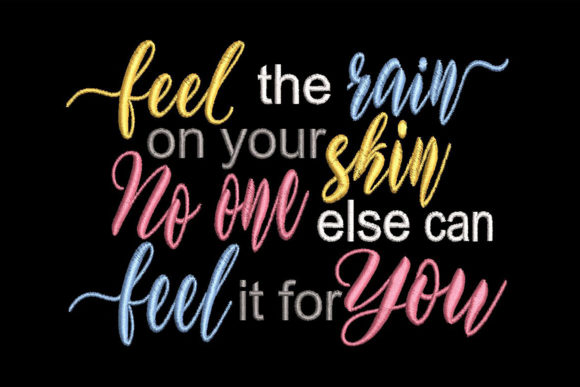
Whenever I look at a new embroidery file, especially an inspirational one, my first question is always a practical one: where does this design belong? What kind of project will make it sing? Opening up “Feel the Rain on Your Skin,” the answer came quickly. This isn’t a loud, graphic statement piece; it’s a soft, thoughtful whisper. The layout and the gentle theme create a mood of quiet reflection and natural beauty. It feels personal, intimate—like a note passed between friends. That visual personality tells me it belongs on items meant for closeness, comfort, and personal connection.
The Natural Habitat for This Design
I immediately picture this stitched onto the corner of a linen pillow cover for a cozy reading nook, or centered on a soft cotton apron. It has the right level of detail to be interesting without being overwhelming, making it perfect for home décor items and personalized gifts where the text is meant to be read and pondered. For my craft business, I’m thinking of boutique kitchen towels or a simple tote bag for a book-loving friend. The quote’s theme evokes nature and feeling, so it pairs wonderfully with natural fabrics and projects meant for everyday, mindful use.
For client work, I’d lean towards custom orders for wedding gifts—perhaps on a blanket or a set of tea towels—or nursery decor where the sentiment is gentle and hopeful. As an Etsy seller, I can see this design elevating a simple sweatshirt or baby item from a generic product to a meaningful, gift-ready piece. The inspirational nature gives it a built-in “why” that customers appreciate, adding perceived value to the finished product.
Performance in Real-World Projects
Let’s talk about stitching it out. On a mid-weight cotton sweatshirt or a canvas tote bag, this design should perform beautifully. The balance between the textual elements and any decorative accents (like suggested raindrops or soft lines) is crucial. I’d pay close attention to the stitch density in any fill stitch areas. On a tote bag that gets rough use, too dense a fill can make the fabric stiff; on a baby garment, it needs to remain flexible and soft.
For caps or hats—those curved surfaces—I’d be cautious. If the design has wide, sweeping elements or very small lettering, registration on a curved seam can be tricky. It’s always wise to test on scrap fabric of the same texture first. A successful stitch-out on a cap, however, would make for a fantastic, unique product for a small shop. Similarly, transforming it into an embroidered patch opens up possibilities for jackets, backpacks, or as a standalone product in a craft fair booth.
Where This Design Demands Extra Care
Some applications require a more thoughtful approach. Thin or stretchy fabrics, like lightweight t-shirts, will need excellent stabilizer and possibly a reduction in hoop size to prevent puckering. Dark fabric backgrounds are a classic consideration; you need strong thread color contrast for the text to remain clear and legible, ensuring the inspirational message isn’t lost.
The real test for any design with text is the small details. Tiny lettering or intricate decorative corners can get lost on textured fabrics like some linens or become muddy if the satin stitch width is too narrow. Always inspect those areas in your test run. Also, for products destined for frequent washing—like kitchen towels or baby clothes—a robust stitch structure and high-quality thread are non-negotiable to maintain that handmade presentation and customer trust over time.
Impact on Your Business and Your Customer
From a commercial perspective, “Feel the Rain on Your Skin” is a solid design asset. Its clear, heartfelt theme supports brand consistency for shops focusing on mindfulness, nature, or inspirational gifts. When a customer sees this on a product, they immediately understand its purpose—it’s giftable. That recognition drives buyer engagement. It’s not just a decorative element; it’s a conversation.
For digital product sellers offering the file itself, providing clear printable mockups on both light and dark backgrounds helps buyers visualize its application, increasing professionalism and sales. For apparel decorators, using it on custom apparel like a simple crewneck sweatshirt creates a high-value, low-volume product perfect for small batch production.
A Designer’s Practical Notes Before You Hoop
- Always, always test the design on scrap fabric that matches your final project’s weight and texture.
- Review the stitch density preview in your software. Are there extremely dense areas that might need adjustment for your specific fabric?
- Check thread color contrast. Run a mental preview: how will it look on white? On heather grey? On black? Sometimes a slight color shift can make the design pop.
- Confirm the necessary hoop size for clean execution. Don’t try to squeeze a large design into a small hoop if the detail will suffer.
- Inspect the small details. Are there any single-running stitch lines or tiny elements that might vanish on a napped fabric?
- Use the proper stabilizer. This is the foundation of your embroidery project.
- Most importantly, check the licensing terms provided with the embroidery file. Confirm it is suitable for both personal and commercial projects if you intend to sell the finished product. Never assume.
In the end, “Feel the Rain on Your Skin” strikes me as a versatile, sentiment-driven design that, when stitched with care on the right product, can create a truly meaningful handmade product. It’s a design that asks you to consider the final wearer or recipient, which is the heart of good embroidery for gifts and business. Your job as the maker is to match its gentle mood with a thoughtful application, ensuring every stitch carries that feeling through to the finished product.