Professional Review: The Great Pyramid of Giza Redwork
A Designer's First Impression
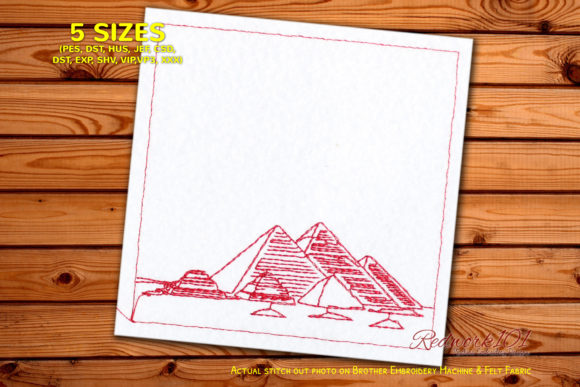
When a business owner selects an embroidery file, the first impression is crucial. The Great Pyramid of Giza Redwork presents a classic and instantly recognizable subject. The “Redwork” style, traditionally using a single red thread color for outlines, suggests a handmade, illustrative quality. This isn’t a glossy, hyper-realistic logo; it’s a narrative piece. For a small business, that feel can be incredibly valuable. It leans towards rustic, decorative, and historic, evoking a sense of craftsmanship and timelessness. Whether your brand is a boutique, a creative studio, or a café with a worldly theme, this design communicates a story rather than just a corporate mark. It feels less like a standard logo and more like a premium badge or an elegant accent.
Real-World Business Applications
Let's translate that impression into practical use. As an embroidery designer, I evaluate a file based on how it performs across common small business merchandise.
Embroidered Patches and Product Labels
The Great Pyramid of Giza Redwork is a strong candidate for custom patches. Its defined outline, given the Redwork approach, should translate well into a clean-edged patch. This makes it ideal for adding a branded element to tote bags, backpacks, or as a sleeve detail on staff uniforms. For a handmade shop or Etsy seller, a patch with this design could serve as a beautiful product label sewn onto items, elevating the perceived value. It adds a “handmade product” authenticity that printed labels often lack.
Apparel and Uniform Accents
For chest logos on aprons, subtle sleeve designs on work shirts, or as an accent on the front of caps, this design offers flexibility. The single-color (or limited color) scheme means it won’t clash with existing brand colors and can act as a sophisticated secondary mark. A bakery, florist, or pet brand looking for a unique uniform element—something beyond a simple text logo—could use this as a thematic badge. On a chef’s apron or a boutique staff’s blouse, it becomes a decorative, professional touch that sparks customer curiosity and engagement.
Branded Merchandise and Customer Gifts
This design excels for special merchandise. Imagine it embroidered on the front of a canvas tote bag for customer gifts or event merch. Its artistic quality makes it suitable for items meant as keepsakes, not just everyday wear. For a creative studio or local business, offering embroidered caps or tote bags with this design creates a memorable branded product that feels thoughtful and designed, not generic.
Considerations for Successful Application
Every embroidery design has areas where careful application is key. Here are my designer notes for using The Great Pyramid of Giza Redwork commercially.
Scale and Detail Preservation: The Great Pyramid of Giza Redwork’s success hinges on scale. At very small sizes—like on a cap front or a tiny product label—the intricate outline details could become lost or muddled if the stitch density is too high. Always test the embroidery file at your intended finished size first. Create a printable mockup for client approval, but also stitch a sample on real fabric.
Fabric and Stabilizer Choices: The Redwork style, often involving fine lines, requires proper stabilizer to prevent puckering, especially on textured fabrics like canvas for tote bags or curved surfaces like caps. For dark uniforms or apparel, ensure the thread color (likely red or a chosen alternative) offers strong contrast. Test it in black and white first on your fabric to check clarity.
Durability and Presentation: For items that need frequent washing, like staff uniforms or aprons, the design’s integrity is important. A clean, well-spaced outline should hold up well, but confirm the stitch count and density with your embroidery machine settings to avoid overly thick areas that could wear differently.
Impact on Brand Identity and Professionalism
Choosing an embroidery design is a branding decision. The Great Pyramid of Giza Redwork affects your business’s visual identity in specific ways.
It introduces a classic, almost scholarly aesthetic. This can bolster customer trust for brands associated with history, craftsmanship, travel, or knowledge. It feels premium and deliberate, which can increase the perceived value of your merchandise or the professionalism of your staff uniforms. For a small business, using such a distinctive design creates strong visual consistency across different items—patches, aprons, caps—all carrying the same elegant accent.
However, its decorative nature means it might not function as a primary logo for all businesses. It’s an excellent complement, an accent that tells a story. Compare it beside your other design assets to ensure it harmonizes. Its handmade presentation is perfect for craft businesses, Etsy sellers, and boutiques where the human touch is a selling point.
Practical Designer Notes Before Production
Before running this design for commercial embroidery, follow these final steps. They are standard in my workflow for any digital embroidery file used for small business merch.
- Test at Small Patch Size: Hoop a small sample, perhaps 2 inches, to see if the outline remains crisp.
- Review Thread Color Contrast: The description mentions "Redwork," but you may choose another color. Check how it reads on your specific fabric colors.
- Inspect Spacing and Hoop Size: Confirm the design fits comfortably within your intended hoop size without needing excessive scaling.
- Create a Physical Sample: Never rely solely on the digital preview. Stitch it on the actual fabric you'll use—denim for caps, canvas for bags, twill for patches.
- Confirm Commercial Licensing: The product category is listed as Asia and type as Embroidery. Before using it for business products, verify the licensing terms of the embroidery file to ensure clear commercial use rights.
In summary, The Great Pyramid of Giza Redwork is a distinctive, story-driven embroidery file with significant potential for small business merchandise. It works best as a premium accent, a patch, or a uniform badge, adding a layer of handmade elegance that can enhance brand recognition and customer engagement. With careful testing and application, it can become a valuable part of your branded product lineup.